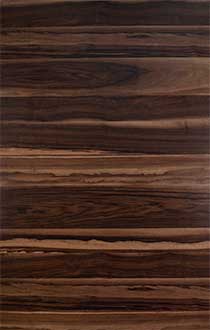
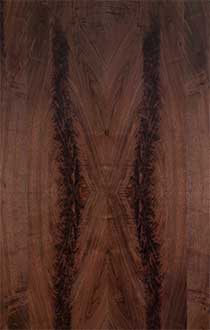
Botanical name: Juglans nigra
Origin: North America
Trade Names: Black Walnut, American Walnut.
Uses: Acoustic panels, architectural panels, millwork and fine furniture, as well as yacht and aircraft interiors.
Range: A native North American tree, reaching heights of Height up to 40 m, with trunk diameters generally between 2-4 feet. Historically used for gun stocks, furniture, flooring, paddles, and a variety of other wood products. This wood is incredibly popular among woodworkers because of its cooperative working characteristics.
Properties: Stable, shock resistant, and strong.
Botanical name: Juglans nigra
Origin: North America
Trade Names: Black Walnut, American Walnut.
Uses: Acoustic panels, architectural panels, millwork and fine furniture, as well as yacht and aircraft interiors.
Range: A native North American tree, reaching heights of Height up to 40 m, with trunk diameters generally between 2-4 feet. Historically used for gun stocks, furniture, flooring, paddles, and a variety of other wood products. This wood is incredibly popular among woodworkers because of its cooperative working characteristics.
Properties: Stable, shock resistant, and strong.

Botanical name: Cordia spp
Origin: Mexico and Central/South America
Range: Can grow up to 20-30 m tall with 1-1.5 m trunk diameter.
Uses: Fine furniture, cabinetry, flooring, veneer, boatbuilding, musical instruments, gunstocks, turned objects, and other small specialty wood items.
Properties: finishing very smoothly and is highly attractive.

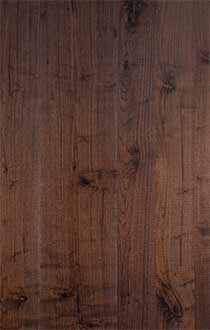
Botanic Name: None
Trade Names: Bog Oak, Black Oak
Origin: Europe
Range: Not a specific species, but is rather a term that designates oak that has been buried in a peat bog for hundreds or sometimes thousands of years. They were felled by natural events and started petrification in gravel beds under water. The dark colour is caused by tannin reactions with water containing iron. The intensity of the colouring increases during the storage period.
Uses: Bog oak has been extensively used in European luxury goods for centuries. It was highly prized for fine woodworking - inlay, detail-work and turning - due to the fact that it is the only native black European wood.
Properties: Bog or Moor Oaks are generally found when excavating lakes or digging gravel pits in the plains of large rivers. After it has been extracted and dried, bog oak does not require additional artificial staining and is often used in the production of luxury furniture and interiors.
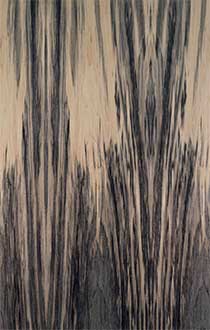
Botanical name: Trema orientalis
Origin: Native to tropical and southern Africa, Asia and Australia.
Range: The wood is relatively soft, and burns easily and quickly when dry. The wood is suitable for paper and pulp production producing paper with good tensile strength and folding endurance.
Uses: The bark can be used for making string or rope, and used as waterproofing fishing-lines. In India and Tanzania, the wood is used to make charcoal and is a good fire starter
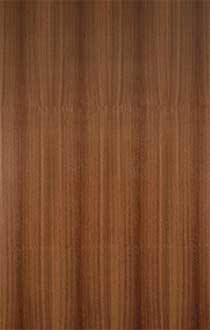
Botanical name: Betula alleghaniensis
Origin: U.S. and Canada
Range: Situated in a wide range across the northern U.S. and Canada, yellow birch generally grows best in rich, moist woodlands by rivers and streams.
Uses: It is used for making furniture, cabinetry, charcoal, pulp, interior finish, veneer, tool handles, boxes, woodenware, and interior doors.
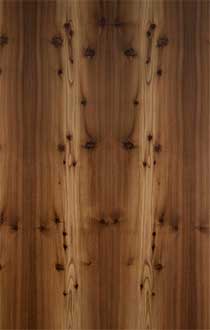
Botanical name:Larixoccidentalis
Origin:Northwestern North America
Range: The tree goes up to 30-55 m tall, 1-1.5 m trunk diameter. It is valued for its tough, waterproof and durable qualities.
Uses: Used as a top-quality knot-free timber. It is in great demand for building yachts and other small boats, extensively for exterior cladding of buildings, and interior paneling.
Properties: Heaviest and hardest native coniferous wood.
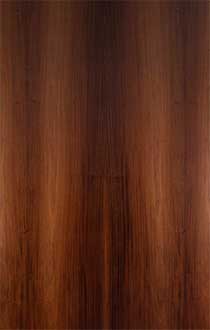
Botanical name:Swietenia mahogany
Origin:Americas
Range: One of the first places Mahogany wood was discovered was in Belize, however it soon became known that the Mahogany tree was indigenous to the Americas. In its native environment, the Mahogany tree grows to an immense size – as much as 150 feet high and between 10 and 12 feet in diameter. The average Mahogany tree is 3 to 6 feet in diameter.
Uses:To manufacture a veneer product, in which a core of inferior wood is covered with a thin layer of mahogany.
Properties: It is a tall evergreen tree with hard wood that turns reddish brown at maturity. Any of several tropical hardwood timber trees, especially certain species in the family Meliaceae. One such is Swietenia mahagoni, from tropical America.
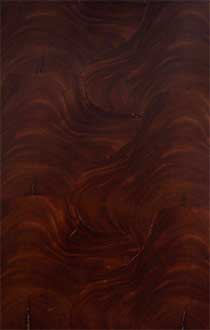
Botanical name: Swietenia mahagoni
Origin: Americas
Range: One of the first places Mahogany wood was discovered was in Belize, however it soon became known that the Mahogany tree was indigenous to the Americas. In its native environment, the Mahogany tree grows to an immense size – as much as 150 feet high and between 10 and 12 feet in diameter. The average Mahogany tree is 3 to 6 feet in diameter.
Uses: To manufacture a veneer product, in which a core of inferior wood is covered with a thin layer of mahogany.
Properties: Has straight-grains and a reddish-brown hue of timber.
Range: It is a tall evergreen tree with hard wood that turns reddish brown at maturity. any of several tropical hardwood timber trees, especially certain species in the family Meliaceae. One such is Swietenia mahagoni, from tropical America.
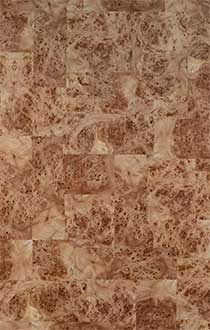
Botanic name: Populus nigra
Trade Names: Mapa Burl, Mapi Burl
Origin: Central, Western and Eastern Europe
Range: Mapa Burl are popular trees which develop abnormal trunk formations as a result of external influences. The occurrence of Mapa Burl logs suitable for veneer extends from the meadow land along the German Rhine River across to Northern and Southern France. The tree grows to average heights of 100 to 115 feet. Its weight averages around 28 pounds per cubic foot.
Uses: This burl is stunning—an extraordinary and unexpected choice for residential furniture, cabinetry, and architectural panels and applications, marquetry, millwork, and store fixtures.
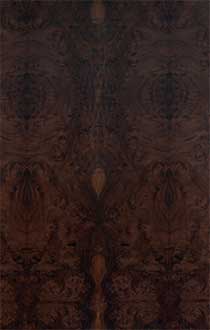
Trade names: American Walnut Burl, Claro Walnut
Family: Juglandaceae
Colour: Light to medium brown, occasional dark browns
Origin: North America
Hardness: Medium
Range: Walnut burl comes usually from the root bole of walnut trees, where a large ball often occurs. This is most common on orchard trees; the burls are sustainably harvested when the trees are removed to replant the orchard.
Uses: It is used on everything from fine furniture to automobiles. The rich brown colour is frequently accented with a light coat of penetrating stain which brings out the figure in these wood veneer sheets. Vintage walnut furniture pieces are usually very warm in colour.
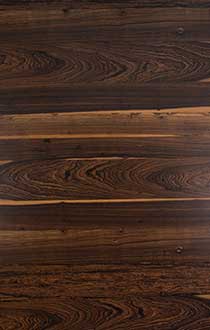
Botanical name: Cordia dodecandra
Trade names: Siricote, Ciricote, Zircote, Ziracote
Region: Central America and Mexico
Range: The size of the trees is reported to vary from small to large, sometimes reaching 100 feet in height. The trees are reported to be often sparsely distributed over a wide range. 30-65 ft (10-20 m) tall, 2-3 ft (.6-1.0 m) trunk diameter 50 lbs/ft3 (805 kg/m3)
Uses: Furniture, veneer, cabinetry, gunstocks, musical instruments, turned objects, and other small specialty wood items.
Properties: Has a medium to fine texture, and a straight to slightly interlocked grain. The pores are small, and overall, the wood is very reminiscent of rosewood. Ziricote can be brittle but is reported to be easy to work, finishing very smoothly and is highly attractive.
Uses: Instruments; Fine Furniture; Cabinetry; Inlays; Turnery; Flooring; Gunstocks.